
This is an amalgamation of conversations I had on a recent episode of The Frommer’s Travel Podcast. To hear the complete episode, please click here or watch the video version here.
In 1885, the Northern Michigan Asylum opened in Traverse City as a psychiatric hospital. The staff was part of the Moral Treatment Movement, a new approach to care for those with mental illness that eschewed beatings, bleedings, restraints, and ice bath immersions, all of which were common and cruel psychiatric “therapies” in the 19th century.
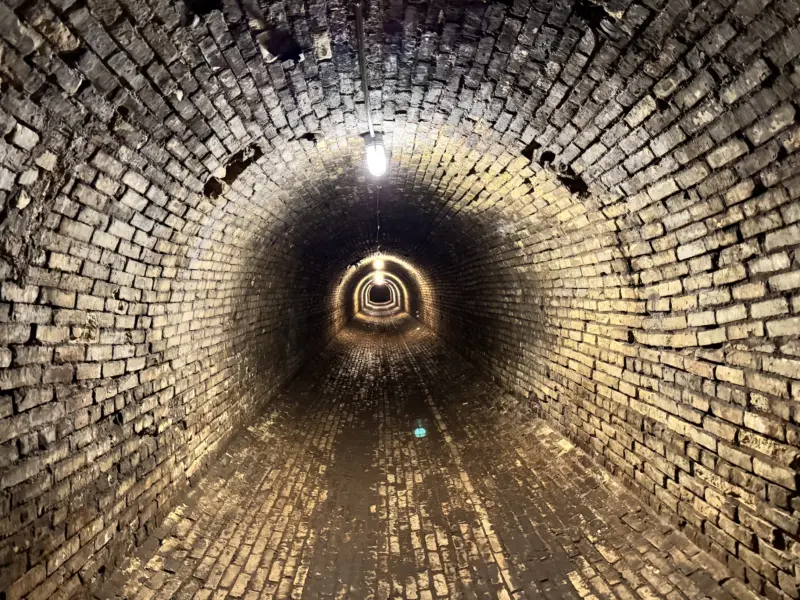
On my recent trip to Northern Michigan, I took a tour of this now-decommissioned hospital (it closed in 1989), where I learned about the lives of those who lived and worked there, and I walked through the spooky, labyrinthine tunnels beneath the facility (see below).
Led by a woman who grew up blocks away, the tour was utterly engrossing, often moving and highly personal, hopping from information about how patients were housed (those with conditions that caused them to shout were put next to hard-of-hearing dementia patients), to architectural details that were meant to be curative, to the many dark stories of failed treatments, to tales of those who shouldn’t have been committed here.
I must say that when I learned that I was going to get to go back to the Traverse City region, visiting a former mental institution was not on my Bingo card. But that’s the thing about this corner of the Midwest: It always surprises.
“It's hard to describe Traverse City to somebody who hasn't been to Traverse City,” Trevor Tkach, CEO of the Traverse City Tourist Board told me at the taping for The Frommer’s Travel Show when we met up in August in Michigan. “How do you put it in a package for people to understand?”
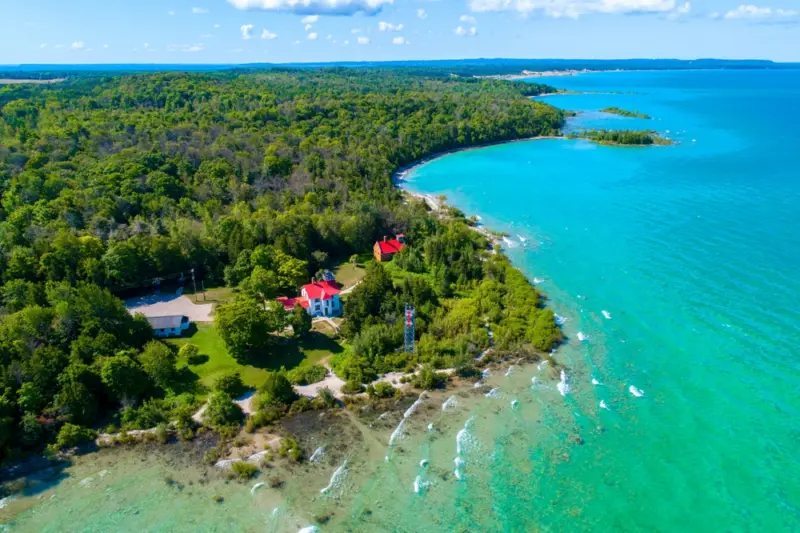
“Because you've got water [that] looks like you're in the Caribbean. The wineries make you feel like, well, maybe I'm in Napa or I could be in Italy. There’s all these amazing elements. But it's us. It's unique. It's different. You can compare it to those things, but it truly is a flavor of its own.”
The elements that make the Traverse City region unique
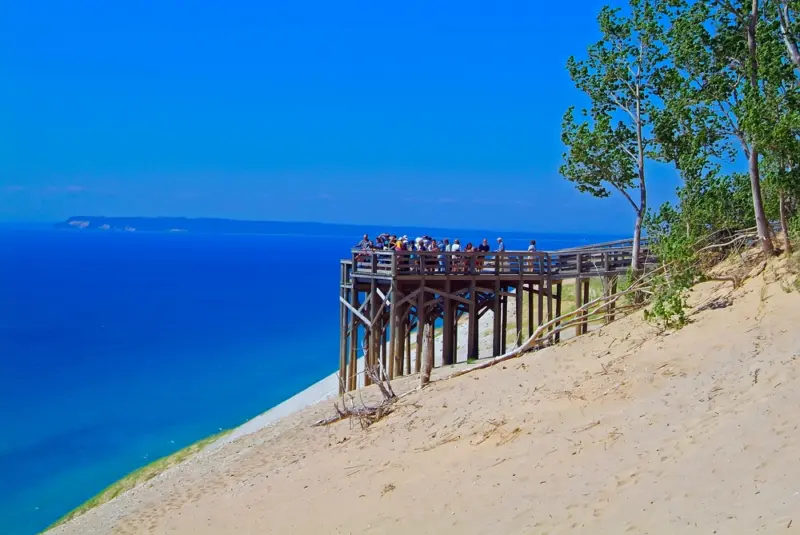
As Tkach said, marquee attractions here can be hard to count quickly, but I’d start with Sleeping Bear Dunes National Lakeshore, a fitness challenge masquerading as a nature site.
The dunes tower some 450 feet above the lake, and some visitors foolishly hike down them before discovering they don’t have the strength to make it back up again. “Don't take my word for it, but I think it's around $3,000 if the Coast Guard has to help you off that hill,” Tkach told me.
It’s also possible to hike on a more forgiving, and level, trail system around the park, and to spot local critters. Some 50 types of mammal call the park home, from American black bears to river otters.
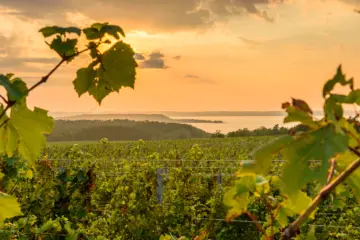
Next visitor-drawing element: accomplished wineries. “We now have more than 50 wineries and they're growing a wide variety of grapes,” Tkach told me. “We're on the 45th parallel. [A notable latitude for wine growing that includes such storied regions as the Willamette Valley in Oregon, Piedmont in Italy and Bordeaux, and the Rhône Valley in France]. We are proximate to water, and we've got different temperature zones that we fit into. It's interesting to watch the winemakers develop flavors and palates that you can't find anywhere else on the planet,” says Tkach.
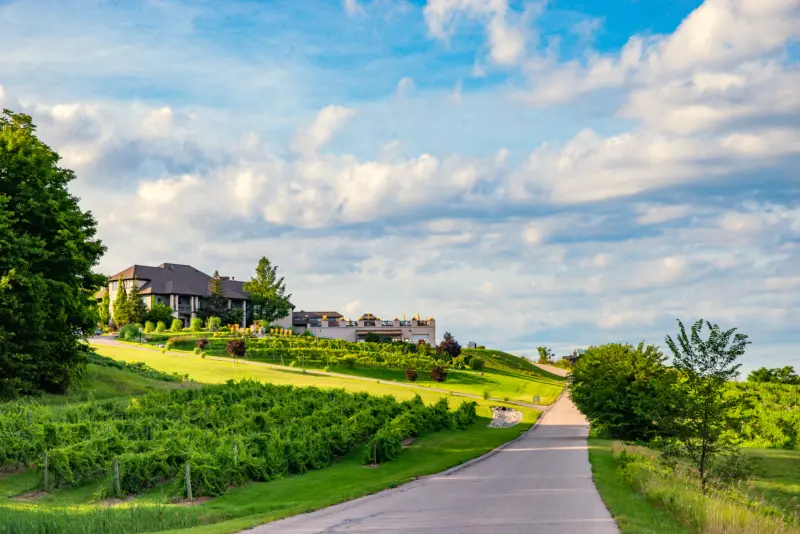
Wine culture has spawned a thriving foodie scene here, which reaches its zenith every August with the Traverse City Food and Wine Festival.
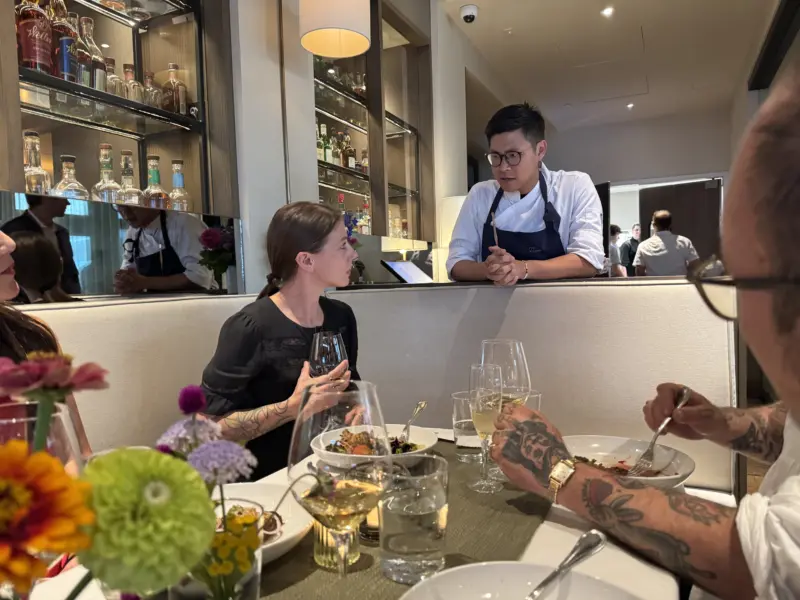
I was lucky enough to attend this year, which meant I got to attend cooking demonstrations, taste treats at dozens of artisanal producers' booths, hear such culinary celebrities as Ruth Reichl and Martin Sorge (winner, The Great American Baking Show) speak, and even hit the lake aboard a "Bubblies and Bivalves" cruise.
The highlight? Dinners cooked for a select number of attendees by some of the best chefs in the country. My last meal was overseen by TV chef par extraordinaire Andrew Zimmern.
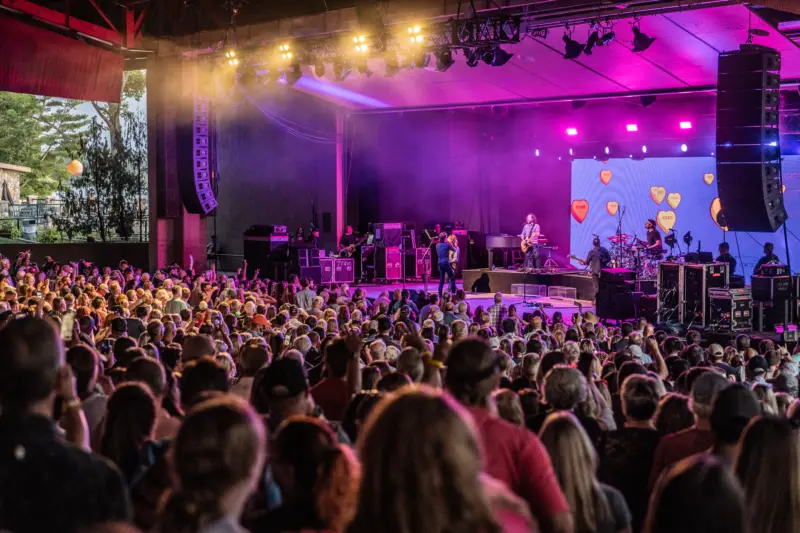
The performing arts also thrive in Traverse City and environs. “We have programming all year round,” says Tkach. “[Some of it at] the beautiful historic City Opera House downtown.”
Right on the doorstep of Traverse City is Interlochen Center for the Arts, a high school and summer camp for kids who are unusually talented in the arts. Alumni include Chappel Roan, Charlie Puth, Jessye Norman, Dermot Mulroney, Josh Groban, and Rufus Wainwright.
Not only do the students there put on wonderful concerts, dance performances, musicals, and plays, but also, some of the biggest names in music perform there regularly. Opera star Renee Fleming was on the bill in the summer of 2026, as were Emmylou Harris, Graham Nash, Jason Isbell, The Stray Cats, and Jefferson Starship.
This focus on the performing arts even informs the museums around Traverse City. A highlight for history, and music fans is The Music House Museum, dedicated to mechanical instruments from the 19th century forward, including a player piano that was programmed by George Gershwin himself to play his Rhapsody in Blue. Click here to see a video of a curator demonstrating that early form of karaoke.
Just beyond Traverse City: Charlevoix
Though you could spend a vacation entirely in Traverse City, it’s also a smart jumping-off point for other worthy Michigan spots, like Charlevoix. About an hour’s drive from Traverse City, it’s a top pick for anyone who wants to spend a holiday either on or in the water.
“Lake Charlevoix is considered one of the most beautiful lakes in the U.S., right behind Lake Tahoe,” said Amanda Wilkin, Executive Director of Visit Charlevoix on the podcast on a balcony, which was taped overlooking the waters (she wasn’t exaggerating). “Charlevoix [the town] is surrounded by water. We have Lake Charlevoix, Lake Michigan, and Round Lake.”
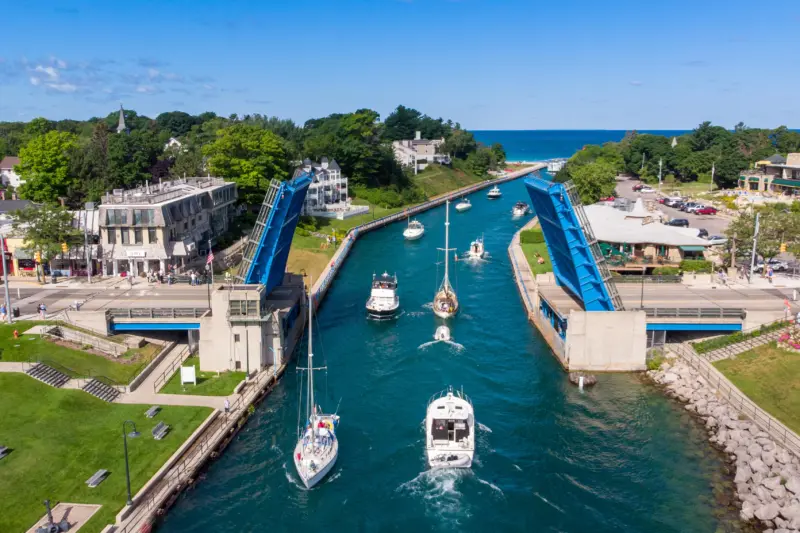
Off those many lakes are beaches—ones that rarely get crowded, says Wilkin, because “there’s so many [of them]. [They are all] free and open to the public”.
Inland are a number of notable structures built by an eccentric and beloved architecture school dropout. “Earl Young built about 27, 28 homes and commercial properties [from the 1920s to the 1960s],” Wilkin told me. “He thought architecture had too many rules and he wanted to do his own thing. So he got his real estate license and just started building houses. He actually didn't draw any plans at all. His wife drew some pictures of what he described and gave it to the contractors to build”.
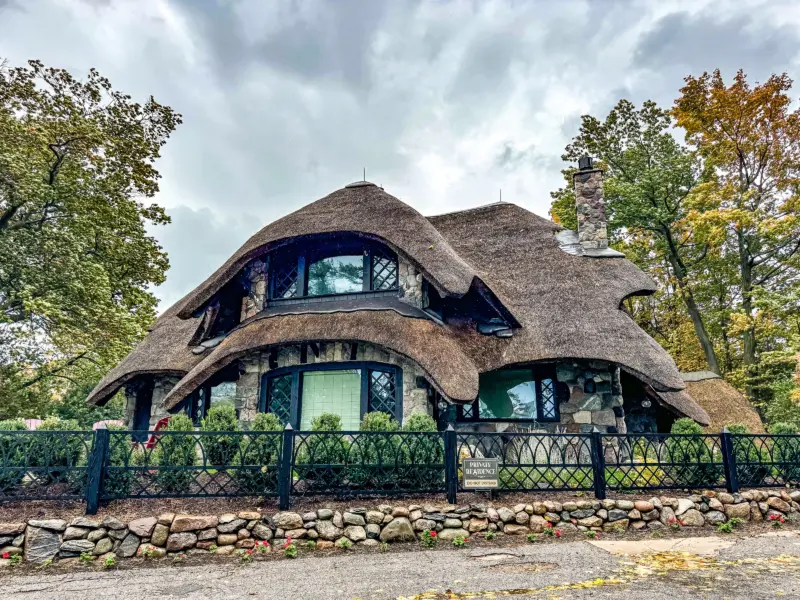
These homes are so unusual and beautiful that people come from all over the world to stay in them (some are now Airbnbs) or take tours, offered daily in high season.
“Today, we call them Mushroom Houses because they look like they grew up out of the ground. They're very organic-looking, with undulating cedar shake roofs and stones put together in very whimsical ways,” says Wilkin.
Speaking of stones, many folks come to Charlevoix just for those. Both coral-formed Petoskey stones [the Michigan State stone] and Charlevoix stones are easily found on the beaches here.
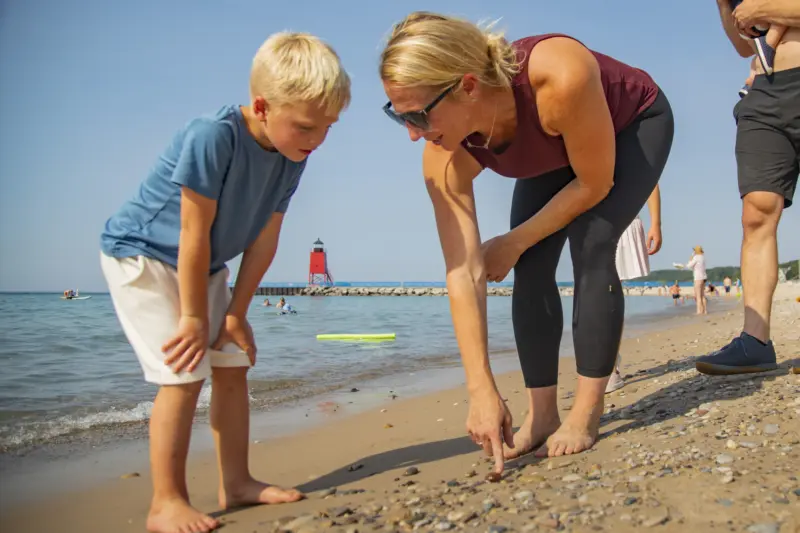
“Rock hounds are in heaven here in Charlevoix,” Wilkin told me. “[Roughly 350 million years ago] all of the continents that were pushed together in Pangea broke apart, and when that happened, the Great Lakes were formed. They were originally salt water and had coral [in them]. When the Lakes became fresh water, [the coral] started getting fossilized.”
Those fossils are exquisite, with sunburst patterns (the Petoskey stones) and rocks that look like they’ve been stamped with snake skin (the Charlevoix stone). Many are made into jewelry that’s then sold in the adorable boutiques that line Charlevoix’s main drag.
Golf, skiing….and elk? Meet Gaylord
Just over 40 miles southeast of Charlevoix is another holiday hot spot especially for golfers: the town of Gaylord.
“We have the highest elevation in the lower peninsula of Michigan, so we have these amazing viewscapes,” Paul Beachnau, CEO and the Executive Director of Visit Gaylord, told me. “We have rolling hills, we have five major river systems, 90 small lakes, and we're notorious for having sandy, loamy soil, which is good for drainage [of golf courses].”
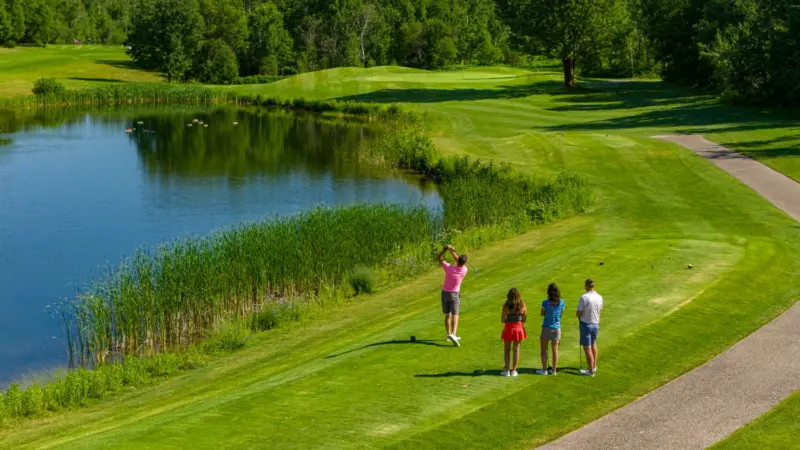
“You take some of these natural characteristics, [and you can see why] some of the best golf course designers, literally in the world, have [wanted to] design courses in Northern Michigan. Designers like Tom Fazio, Robert Trent Jones Junior and Senior, Reese Jones have designed courses here because we have these amazing topographical features that just make for really great golf course design. Fall golf absolutely is stunning,” he said.
“What's unique about golf in Northern Michigan is we don't have highways and roadways and crossing fairways,” Beachnau told me. “When you're out there, chances are you're going to see nature, you're going to see deer, you're going to see foxes, you're going to see wild turkeys.”
So golf is king in spring, summer, and fall. But come winter, Gaylord turns to skiing. Obviously, Michigan doesn’t have highest mountains or steepest slopes in the United States, but it does boast some of the most consistent snow.
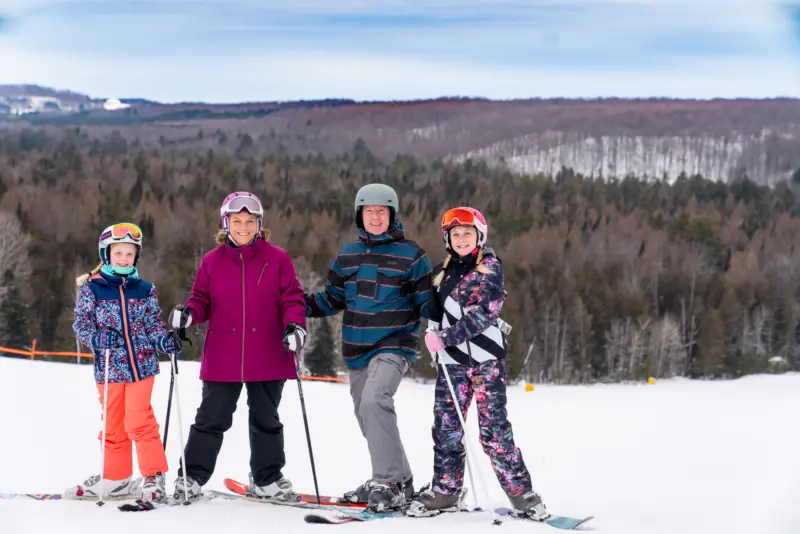
“We're right in what's called the Michigan Snowbelt—the area from Indian River to Grayling,” Beachnau explained. “We get the winds coming off of Lake Michigan, and with the higher elevation, we just get amazing snow—over 200 inches of snow 2 years ago, a record snowfall. Last year we had 180 inches of snow. We average about 150 inches of snow annually. So for snowmobiling, for cross-country skiing, and for downhill skiing, Gaylord's really blessed. We have two downhill ski resorts, Tree Tops and Seagull. Great family skiing for beginners and intermediaries.”
What gets me most excited about Gaylord, though, are its wildlife and the forward-thinking programs that were put in place to bring back native species, like elk.
“Elk went extinct [here] in the late 1800s, but they were reintroduced by our Department of Natural Resources in 1918, so we're celebrating over a hundred years of the reintroduction of elk into Michigan in the National Wildlife Federation,” Beachnau told me. “We have one of the largest free-ranging elk herds east of the Mississippi. It's estimated that we have between 1,400 and 1,800 animals.”
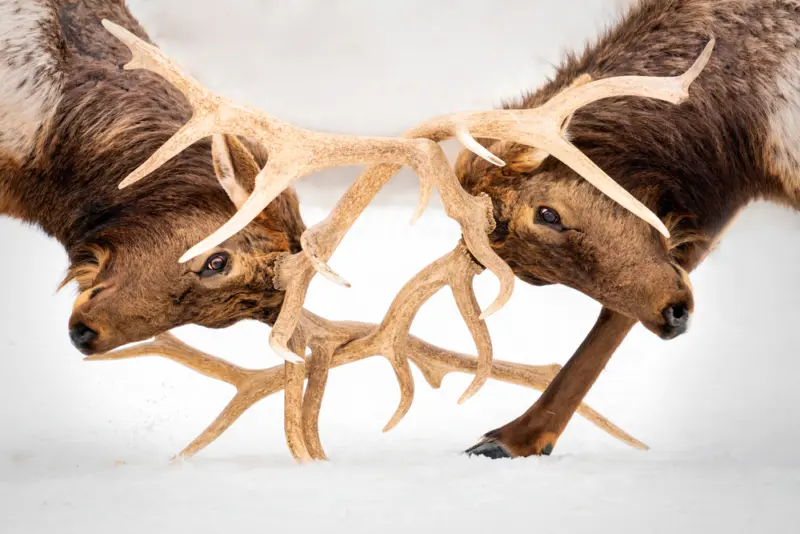
Right now is the top time to visit the herd. “In the fall, they're bugling. They're getting ready for the rut. They're letting other males know, ‘Hey, I'm here. I'm the biggest elk!' They're also calling in the female elk [by] doing this thing called bugling... It's this screechy, loud scream. When you hear it one time, you will know what's going on. It's an amazing experience [to watch this annual ritual].”
Getting To Northern Michigan
Perhaps the biggest surprise of all is that it’s quite easy to get a direct flight into Traverse City from a number of gateways.
On my recent visit, I took a quick flight in from LaGuardia Airport in New York City, but I could have also caught a non-stop in high season from Chicago, Detroit, Minneapolis−Saint Paul, Denver, Dallas-Fort Worth, Houston, Atlanta, Charlotte, Washington, D.C., Boston, or Phoenix-Mesa.
So many people are flying in that the Traverse City airport terminal building is currently undergoing an expansion (happily, well away from the current terminal, so flyers aren’t disturbed by construction mess or noise).
The expansion was necessary. “The terminal was originally designed for 350,000 passengers. Last year we did 935,000 passengers. So almost triple,” Kevin Klein, CEO of the Cherry Capital Airport, told me, noting that the plan is to jump from 5 gates to 14.
This construction follows up on a runway expansion completed before the pandemic. “The infrastructure expanded in 2017 to 2018. We went to 7,000 feet [making] our runways perfect for today's new jets, the 737 Max and the Airbus A320. Now we can get to Europe. We can get to the West Coast,” says Klein.
Klein is hoping that the new design of the terminal will give visitors the feeling that they’ve started their vacation from the moment they step off the plane. “We're focusing on the Sleeping Bear Dunes. So all the colors throughout the [terminal] are going to be earth tones, sandy tones, browns, a Petoskey stone-type look and feel.”
The new terminal is expected to open in May 2028.
(This is a sponsored article.)