
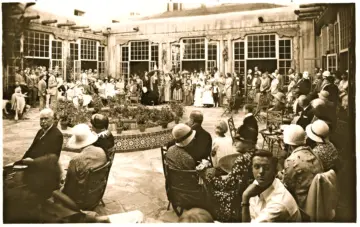
In our recently released New Mexico guidebook, Frommer's Santa Fe, Taos, and Albuquerque, author Erin Vivid Riley writes, “Whoever originally dubbed New Mexico the 'Land of Enchantment' must have coined the state’s motto while taking in a blazing purple-orange-and-red sunset over Santa Fe.”
Santa Fe is an unusually beautiful city, a feast for the eyes that’s amplified by its rich museum and gallery scene. It’s also a place for actual feasts, with world-class, chile-loving restaurants that celebrate the unique mix of Hispanic and Indigenous culinary traditions here. And if you’re interested in viewing ancient petroglyphs and cliff dwellings, Native American pueblos, and geological wonders, Santa Fe makes an excellent jumping-off point to many of the most intriguing sights in Northern New Mexico.
But it’s the city’s remarkable and varied history—this is the oldest state capital in the United States—that we're focusing on here. In a recent episode of the Frommer’s Travel Show podcast, I interview Ed Pulsifer, the hotel historian for La Fonda on the Plaza, an institution whose story dovetails with that of New Mexico itself. What follows is a transcript of our conversation, edited for clarity and length.
Ed Pulsifer: [La Fonda on the Plaza] sits on the oldest lodging corner in the United States. There's been a form of lodging since about 1610.
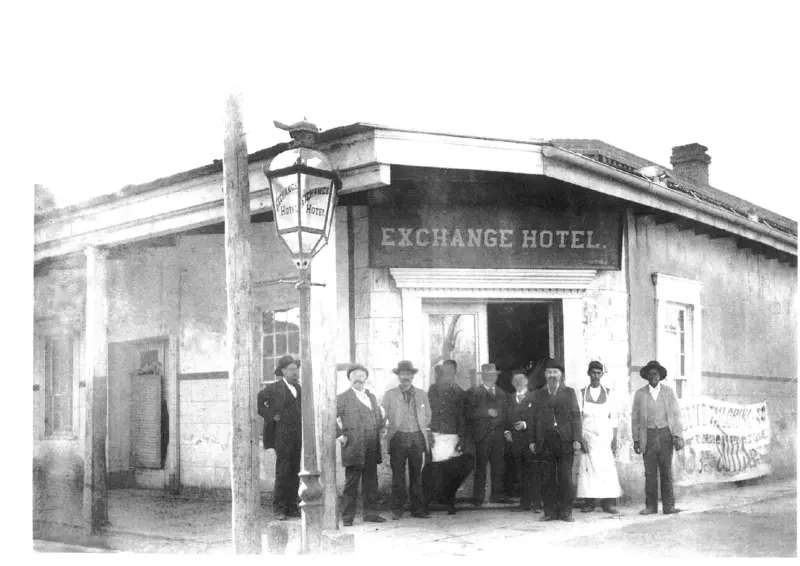
Santa Fe has always been a trade hub for trading activity. When people would arrive, they would normally ask for the mayor, who would help find them lodging. Prior to La Fonda was the Exchange Hotel. It was an old western hotel built in the 1840s. This photo is [from] about 1880.
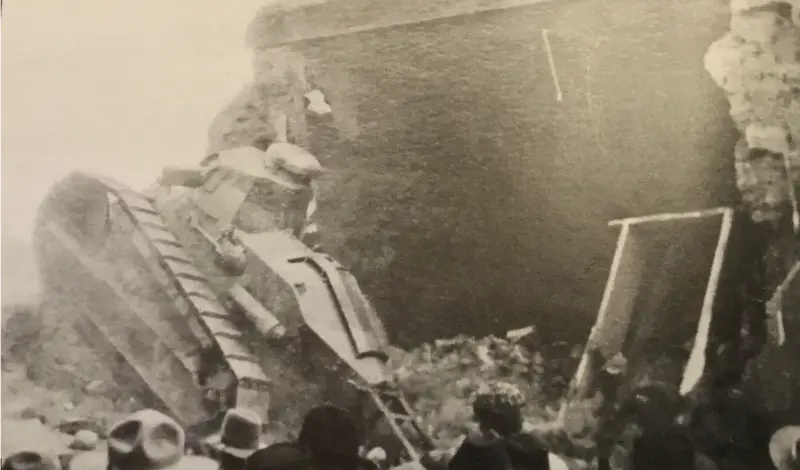
[Eventually] it became very old and dilapidated. So in April of 1919, the local citizens hosted a Victory Bond rally to sell war bonds for World War I. All the businesses closed; they had dignitaries and World War I heroes.
But the biggest hit of this Victory Bond rally was this "Mud Puppy," a two-man tank. They brought it in by train. Every time someone bought a $100 war bond, they got to get in this tank with the driver and take a bash into the hotel, to help tear it down.
Then, in 1919, some local businesspeople formed the Santa Fe Citizens Building Corporation to sell 4,000 shares of $50 stock to raise $200,000 to hire the architectural firm of Rapp, Rapp and Hendrickson to build La Fonda. [This was the firm behind many notable buildings, including the New Mexico Building at the Panama-California Exposition in 1915 at Balboa Park in San Diego].
The original La Fonda opened Dec. 30, 1922, [with] 55 rooms.
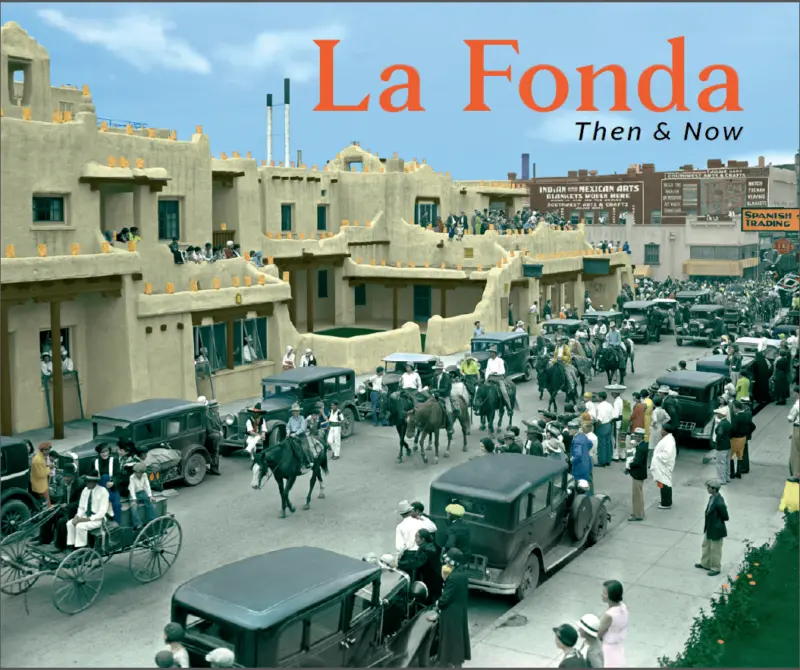
It actually went into receivership the first couple of years. Then, in 1925, the Atchison, Topeka, and Santa Fe Railway buys the hotel for $165,000 and immediately leases it to the Fred Harvey Company.
Fred Harvey immigrated to the U.S. in 1853 from London. He was 17 years old, and he ended up working at a restaurant called Smith and MacNels in New York, a fine dining restaurant. Washing dishes, pots, bussing tables, he then became a line cook, which would have a major impact on his life and a major impact on dining in the U.S.
In 1865, he gets a job with the Burlington Railroad as a manager of freight transportation. He traveled all along the railroad line. One thing Fred Harvey realized is the dining experience [on trains] was horrific. You'd stop every 100 miles at a station, a town, a depot. You had 30 minutes to eat. You were lucky if you got the food. If you did get it, it was horrific. If you did not finish your food, they'd scrape it off the plate into a pot for the next poor captive souls coming through.
So Fred Harvey had this idea that he could create a fine dining experience in 30 minutes: fresh beef, poultry, vegetables, fine china, glass, silver.
On a handshake deal with the Atchison, Topeka and Santa Fe, they agreed in 1876 to provide the space, and he opens up the first Harvey House restaurant in Topeka, Kansas. He was able to provide a fine dining experience in 30 minutes.
By the late 1880s, there was a Harvey House restaurant every hundred miles along the Atchison, Topeka and Santa Fe railroad.
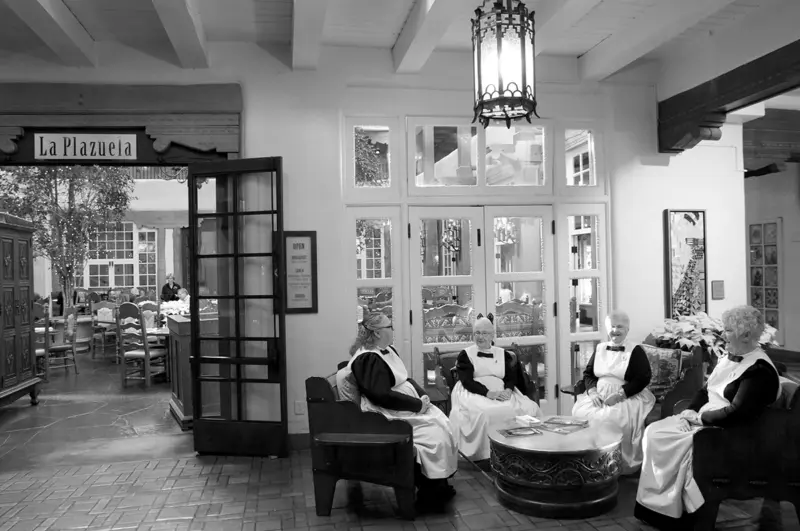
By the mid-1920s, when the Fred Harvey Company was at its peak, it had over 80 Harvey House restaurants all along the railroad line.
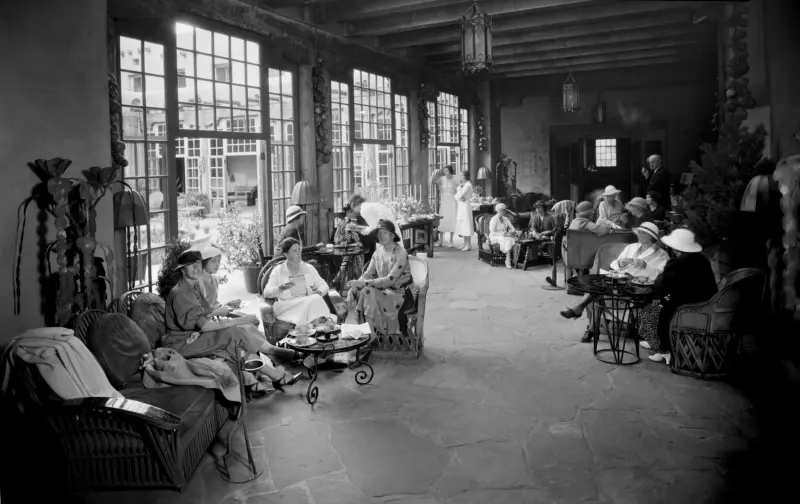
It had newsstands, dining centers, 25 hotels, and about 7,000 employees. It was actually the largest franchise in the world back then. Hilton was barely getting started in the '20s. There was no Disney, no Marriott. It was the Fred Harvey Company that created the first brand of fine dining and the first brand of lodging.
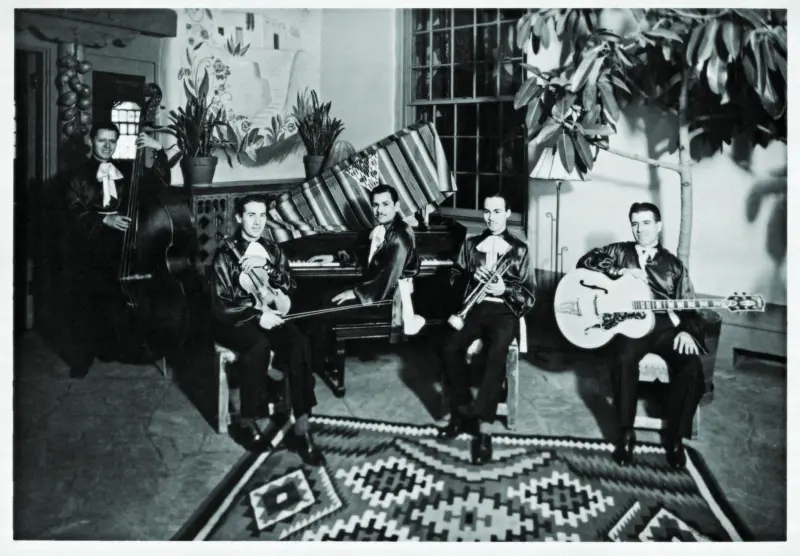
We were a Fred Harvey hotel from 1926 to 1968, when the Harvey Company was sold.
Frommer: You also had some fascinating Manhattan Project history, right?
Pulsifer: Yes. So when the government was looking for a place to build the Manhattan Project, J. Robert Oppenheimer was very influential. He had a ranch in Albuquerque and he loved New Mexico.
So he convinced them to choose Los Alamos, 45 minutes from here. It's high on this mesa, one road going up and back.
But before the government took over Los Alamos to build the new town to build the bomb, Oppenheimer stayed at La Fonda. He had a temporary office here.
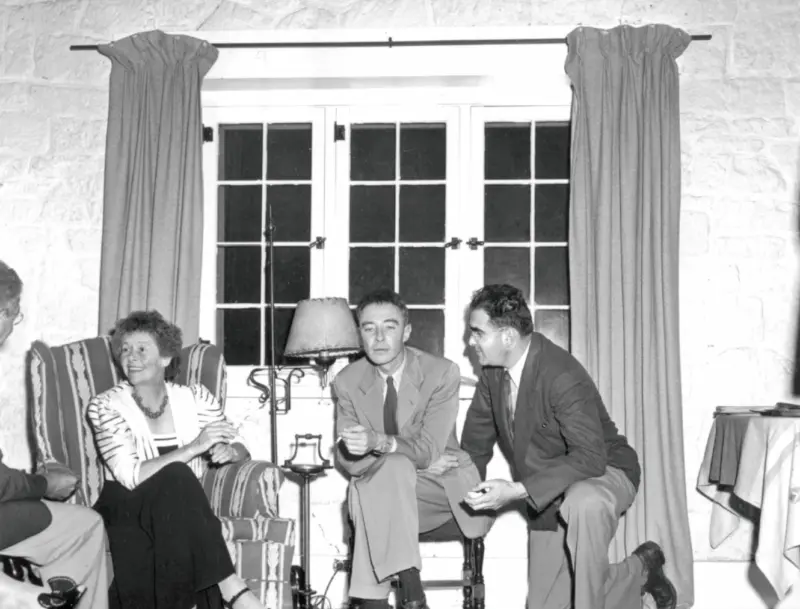
There was originally supposed to be just a few hundred people working on the [Manhattan Project]. It ended up being over 5,000.
The government hired a contractor out of El Paso from 1943 to 1945. Seven days a week, all they did was build government housing, and they stayed at La Fonda, which saved this hotel from going into bankruptcy again.
On Sundays when people could get off “The Hill," everybody came to Santa Fe, being the main city [nearby]. The hotel was such a hub of activity with eating, drinking—lots of drinking—Russian spies, German spies.
The government used [federal] agents as bartenders, as servers, as front desk clerks, as bellmen to monitor what was going on. And if [one of the scientists] had too much to drink [at the bar of the hotel], they would put him in a room and take his pants away until the next day. Couldn't make that up!
Frommer: What was the hotel’s next act?
Pulsifer: In the '50s you had a lot more competition and people weren't traveling by train as much. In the '60s when the interstate system came along and basically bypassed everything along the railroad line and Route 66, that was the end of the Harvey Company.
In 1968, they sold to a Hawaii-based company, but [it] only bought bits and pieces of the Harvey Company. La Fonda was not part of the sale, and it was actually going to be torn down, but in 1968 Sam and Ethel Ballen came from Dallas, Texas, and bought the hotel for a million dollars from the Fred Harvey Company.
It was in horrible shape. But for the next 40 years, they put their heart and soul into bringing it back to life, doing a lot of trade with artists, which was their way to improve the hotel because they didn't have a lot of money. They basically saved this hotel.
It's now one of the most iconic historic properties in the country. We have over 1,200 pieces of art going back to 1922. It's a multimillion-dollar collection. We still keep commissioning local artists to keep adding to the collection.
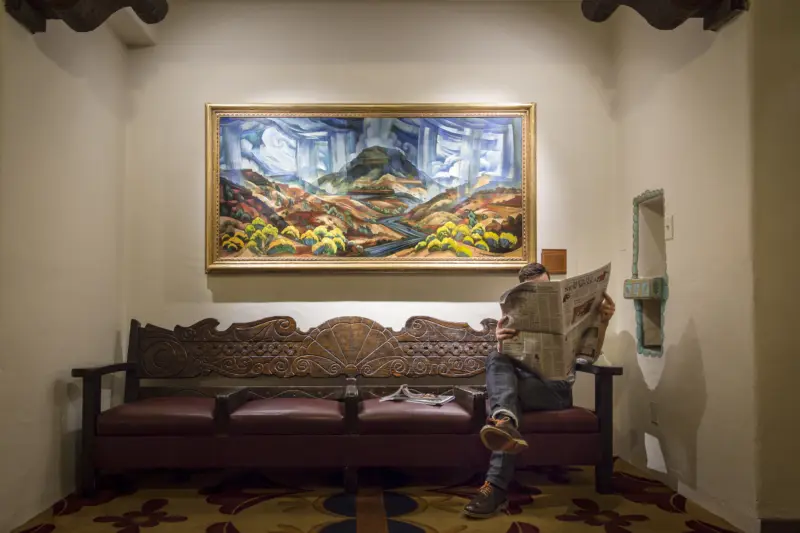
Frommer: And what's so surprising is, in most hotels that have art collections, the art collections are in the public areas where they can be under the gaze of a security guard. Here, you have different art in every single room, and it's really interesting art, too. Can you talk a little bit about that program?
Pulsifer: There's art in all parts of the hotel. Every single guest room has several pieces of original art.
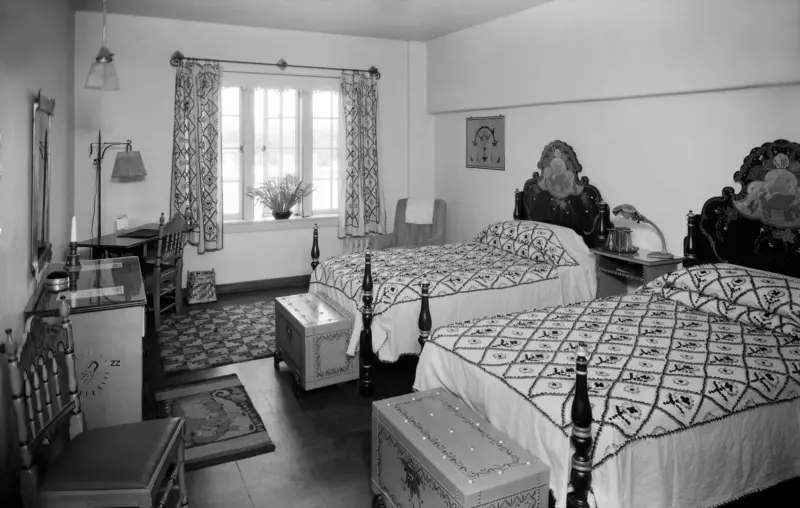
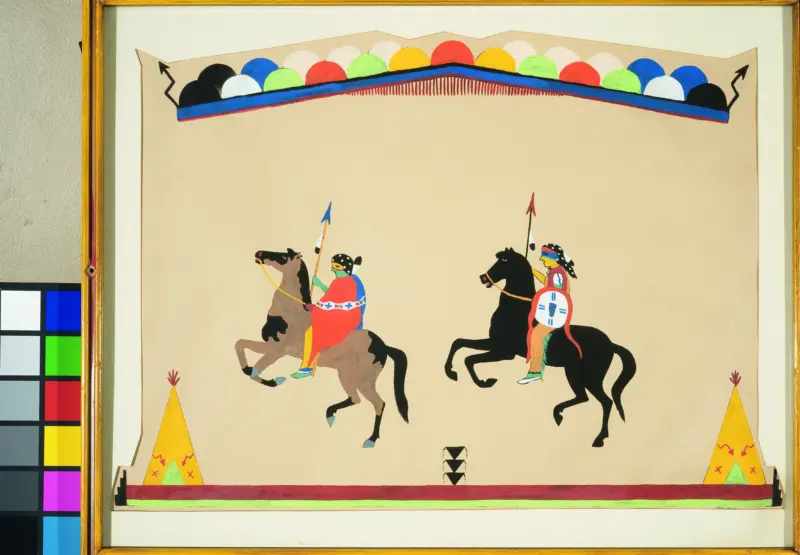
I would say about 75% of our collection is Native American, going back to the '30s and '40s when Dorothy Dunn had her school, the Indian school here, where she would teach Native American artists, give them the tools and resources they need.
Frommer: I took the wonderful free hotel tour, and on that, the guide told us that [Dunn] would teach them by showing them certain subjects that the children would then have to paint. And so you see a lot of the same subjects done by different artists all over the hotel, which is kind of fun to see the small differences one to the next in these paintings.
And these have been just some of the stories you will hear about at La Fonda on the tour.
It was an honor to stay there—you can feel the history very viscerally when you're there.